

Key Takeaways for Jitter-Free Energy
-
Most energy drinks rely on high caffeine and sugar, which can cause spikes, jitters, and crashes. Pairing caffeine with L-theanine can support alertness with less anxiety.1
-
Look for disclosed caffeine amounts around 150 to 200 mg and L-theanine listed in milligrams at roughly a 2:1 ratio to caffeine.
-
Zero or low sugar and added focus ingredients like AlphaSize Alpha GPC, shown clearly on the label, can reduce crash risk and support mental clarity.1
-
Gym users often benefit from formulas that support sustained focus and the mind-muscle connection instead of relying only on high stimulant loads.1
-
Ready to upgrade your energy without the jitters? Experience Bucked Up Performance Energy Drinks and see how a more targeted formula feels.
How to Read an Energy Drink Label for Fewer Jitters
Reading an energy drink label is a skill most people skip. The details below are the ones that matter most.
Caffeine amount. For most adults, the maximum safe daily caffeine intake is around 400 mg per day, with benefits often seen at smaller doses because larger doses increase side effects such as shakiness, anxiety, and headaches. A practical performance target is roughly 1.3 to 2.5 mg per pound of body weight, which works out to approximately 200 mg for a 150-lb person. If a can contains 300 mg or more, that single serving already uses a meaningful portion of your daily ceiling.
L-theanine amount. Many labels fall short here. L-theanine needs to be listed with a clear milligram amount to be useful. A product that lists it somewhere in a proprietary blend gives you no way to tell whether the dose is meaningful. Human studies including Haskell et al. (2008) used 250 mg L-theanine and Giesbrecht et al. (2010) used 97 mg L-theanine, each paired with caffeine. Look for disclosed amounts that land in a similar range and support the 2:1 L-theanine-to-caffeine ratio discussed later.
Sugar content. Sugar creates a secondary energy curve that runs alongside caffeine and then drops off on its own. When both curves fall at the same time, the crash can feel more intense. Zero-sugar or low-sugar formulas remove that extra crash variable.
Focus-supporting ingredients. Some formulas go beyond caffeine and L-theanine and add nootropic compounds for mental clarity.* AlphaSize Alpha GPC is one example, with research showing support for mental focus.* When paired with compounds like Huperzine A, which supports memory recall and focus*, these ingredients can address cognitive performance from several angles instead of relying only on stimulation.1 That combination signals a formula built for sustained alertness, not just a quick buzz.
*These statements have not been evaluated by the Food and Drug Administration. This product is not intended to diagnose, treat, cure, or prevent any disease.
Ready to find a formula that checks these boxes? Explore Bucked Up Performance Energy Drinks that follow these label standards.
Caffeine and L-Theanine in the Gym: Where Many Drinks Miss
Now that you know what to look for on a label, it helps to see how those criteria play out in the gym. The gym context adds a layer of complexity that many energy drink formulas are not designed for. Training sessions demand sustained mental focus alongside physical output, and those needs do not always respond the same way to caffeine.
Tolerance plays a major role. Regular caffeine users often notice that the same dose feels weaker over time. That pattern can push people toward higher-caffeine products, which then increase the risk of jitteriness or anxiety. A better approach often involves a more complete formula that supports focus through additional pathways, such as nootropic ingredients, instead of relying entirely on stimulant load.
The nootropic and cognitive health drinks market is growing at a 13.6% CAGR according to Grand View Research, driven by consumer demand for focus support without the jitteriness of traditional high-caffeine formulas. That trend reflects what many gym users have been asking for: energy that supports the mind-muscle connection, not just a stimulant spike.
Proprietary blends create another challenge. Consumer Reports’ 2026 testing of 23 energy drinks noted that little is known about some of the other ingredients, often listed in proprietary blends without disclosed quantities. When amounts are hidden, you cannot tell whether the L-theanine dose is functional or just there for marketing. Transparent labeling becomes essential for anyone who wants to evaluate what they are actually drinking.
Many consumers now actively check ingredients and labels before purchasing energy drinks. If you are reading this article, you likely fall into that group, so keep checking and comparing.
Energy Drink for Focus Without Crash: Gym-Specific Criteria
Gym users need more than simple wakefulness. They need energy that supports focus through the full session and avoids leaving them anxious mid-set or drained on the drive home.
The evaluation criteria for gym-focused energy drinks include:
-
Caffeine in a range appropriate to your body weight and tolerance, often around 150 to 200 mg for many people in the 130 to 180 lb range
-
L-theanine disclosed in milligrams, ideally at a 2:1 ratio relative to caffeine
-
Zero or low sugar to reduce the chance of a secondary crash
-
Additional focus-supporting ingredients with disclosed amounts, not buried in a blend
-
A label you can clearly read and verify
Bucked Up Performance Energy Drinks are formulated with these criteria in mind. The formula pairs moderate caffeine with L-theanine and includes AlphaSize Alpha GPC to support mental focus and alertness.*1 Every ingredient amount appears on the label, so you can compare the formula directly against the criteria above instead of relying on marketing copy. That level of transparency sits at the core of how Bucked Up builds its products.
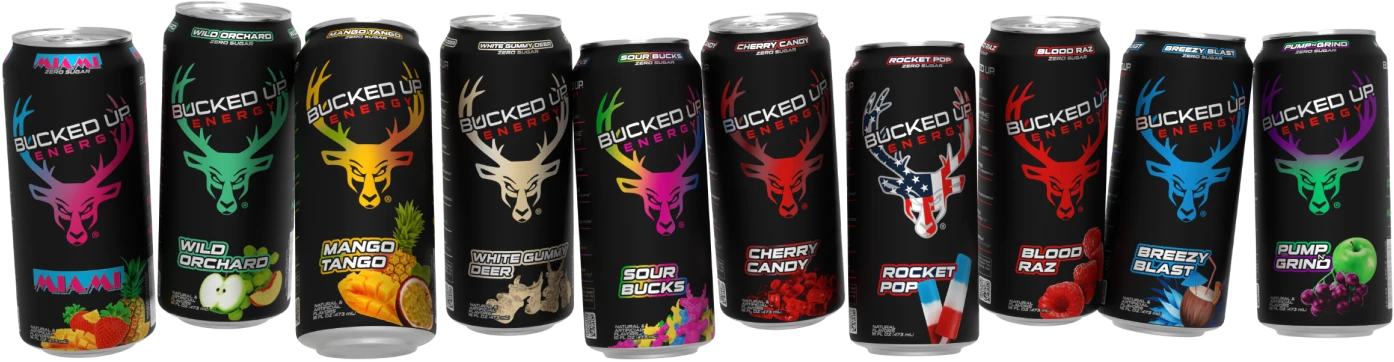
For users who want to stay awake and focused while driving to the gym, during a long training session, or through an afternoon work block, the combination of disclosed caffeine, L-theanine, and nootropic support aligns with research on sustained alertness without overstimulation.1 Researchers describe the combined effect of L-theanine and caffeine as “relaxed wakefulness,” a state of steady, supported focus without sedation or overstimulation, backed by EEG studies showing increased alpha-wave activity. That state fits the needs of anyone who wants to perform, not just stay awake.
Find Bucked Up Performance Energy Drinks near you using the Bucked Up store finder, or order a case online to test the formula in your own routine.
*These statements have not been evaluated by the Food and Drug Administration. This product is not intended to diagnose, treat, cure, or prevent any disease.
Non-Stimulant Alternatives for Late Nights and Caffeine Breaks
Caffeine does not fit every situation. Late-night training, high caffeine sensitivity, or a planned break from stimulants all create good reasons to reach for a zero-caffeine option.
Bucked Up’s Non-Stimulant Pre-Workout is built for these scenarios. It contains Citrulline Malate, AlphaSize Alpha GPC, Senactiv, Beta-Alanine, Taurine, and Himalayan Rock Salt, creating a formula designed to support pump, endurance, focus, and hydration* without any caffeine.1 The same transparent labeling applies, so you can see every ingredient and every amount.
Ingredients like lion’s mane mushroom, citicoline, and ashwagandha are increasingly appearing in canned energy drink formulations as the non-stimulant focus category grows. If your goal is cognitive support without stimulant load, that ingredient category is worth exploring alongside traditional caffeine-based options.
*These statements have not been evaluated by the Food and Drug Administration. This product is not intended to diagnose, treat, cure, or prevent any disease.
Conclusion: A Simple Checklist for Jitter-Free Energy
The search for an energy drink to stay awake without jitters comes down to a short checklist. You need disclosed caffeine in a range appropriate to your body weight, L-theanine listed in milligrams at a meaningful dose, low or zero sugar, and any additional focus-supporting ingredients shown with actual amounts instead of hidden in a blend.
Many energy drinks on the market do not meet all four criteria. Consumer Reports’ 2026 testing found that 16% of 23 energy drinks had more caffeine than advertised, which creates a transparency problem before you even consider L-theanine ratios. Apply the 2:1 L-theanine-to-caffeine guideline discussed earlier whenever you compare labels.
Use these criteria as your filter and apply them to every label, including Bucked Up’s. Transparent formulas hold up to that kind of scrutiny. Products built on proprietary blends and vague marketing claims usually do not.
Find a retailer near you using the Bucked Up store finder, or stock up on transparently labeled Bucked Up Performance Energy Drinks online.
Frequently Asked Questions
What is the best caffeine-to-L-theanine ratio in an energy drink for staying awake without jitters?
Human studies most commonly reference a 2:1 ratio of L-theanine to caffeine as associated with supported alertness and reduced jitteriness. In practical terms, if a drink contains 150 mg of caffeine, a functional L-theanine dose would be around 300 mg. The key requirement is that both amounts appear on the label in milligrams. A product that lists L-theanine without a specific amount, or buries it in a proprietary blend, gives you no way to evaluate whether the dose is meaningful.
How much caffeine is appropriate in an energy drink for gym use?
For most adults, general guidance suggests a maximum of around 400 mg of caffeine per day from all sources. A practical performance target for a single serving is roughly 1.3 to 2.5 mg per pound of body weight. For a 150-lb person, that range works out to approximately 195 to 375 mg, with the lower end fitting everyday use and the higher end better suited to experienced users with established tolerance. Bucked Up Performance Energy Drinks use a moderate caffeine level designed to support sustained alertness while staying below the range where jitteriness and anxiety become more common.
Does sugar in energy drinks cause crashes?
Sugar contributes a secondary energy curve that runs alongside caffeine and then drops off independently. When both the caffeine effect and the sugar effect decline around the same time, the resulting drop in energy and focus can feel more pronounced than either would create alone. Zero-sugar or low-sugar formulas remove that variable, which helps explain why many gym-focused energy drinks have shifted toward sugar-free options. Checking the sugar content on the nutrition facts panel gives you a straightforward way to evaluate any energy drink for crash potential.
What focus-supporting ingredients should I look for beyond caffeine and L-theanine?
AlphaSize Alpha GPC is one of the more researched options and appears in Bucked Up formulas to support mental focus and the mind-muscle connection.*1 Huperzine A is another nootropic compound included in advanced Bucked Up pre-workout formulas for its role in supporting memory recall and focus.*1 Taurine appears in many energy drink formulas and may support cognitive function.*1 The crucial factor with any of these ingredients is a disclosed amount. An ingredient listed without a milligram amount on a label cannot be evaluated for functional dosing.
*These statements have not been evaluated by the Food and Drug Administration. This product is not intended to diagnose, treat, cure, or prevent any disease.
Is Bucked Up Performance Energy Drink suitable for people sensitive to caffeine?
Bucked Up Performance Energy Drinks use a moderate caffeine level paired with L-theanine, which research suggests may support alertness while reducing some of the physiological tension that caffeine alone can produce.1 For users who are highly sensitive to caffeine or who prefer to avoid stimulants entirely, Bucked Up also offers a Non-Stimulant Pre-Workout that contains zero caffeine while still including ingredients designed to support pump, endurance, focus, and hydration.* You can explore the full product range through the Bucked Up store finder or directly on the Bucked Up website.
*These statements have not been evaluated by the Food and Drug Administration. This product is not intended to diagnose, treat, cure, or prevent any disease.
References
Dance/USA. (2026). Energy drinks: What performers need to know. https://danceusa.org/wp-content/uploads/2026/01/Energy-Drinks-Formatted-ready-for-publication.pdf
1 The content provided in this article is for informational purposes only and is not medical advice. Consult with a medical professional before implementing any changes to your diet, health, or exercise routines. Individual results will vary and are based on a combination of each individual’s diet, exercise, age, and health circumstances. These statements have not been evaluated by the Food and Drug Administration. This product is not intended to diagnose, treat, cure or prevent any disease.
This article was written by Ryan Gardner, CEO of Bucked Up. As the maker of Bucked Up Energy Drinks, we have a financial interest in this information. The views expressed are our own and should be read with that context in mind.


Leave a Reply