

Written by: Ryan Gardner, Owner, Managing Partner, CEO, Bucked Up
Key Takeaways
-
The afternoon energy crash is a normal physiological event, and many standard energy drinks create short spikes followed by crashes.
-
Effective focus formulas pair research-aligned nootropics such as Alpha-GPC, L-Theanine, and Huperzine A with caffeine sources that match your work window.
-
Full per-ingredient dose disclosure on the label is essential, because proprietary blends prevent you from confirming effective amounts.
-
Staying within the 400 mg daily caffeine guideline, timing your last dose at least six hours before bed, and staying hydrated support safer long-term use.
-
Ready to upgrade your focus without the crash? Explore formulas with full ingredient disclosure and research-aligned nootropic doses built for productivity.
Key Takeaways: Core Criteria for Focus-First Energy Drinks
This guide builds toward a simple evaluation framework you can use on any label. For desk-based productivity, look for four things: nootropic ingredients at research-aligned doses, caffeine sources that match your target focus window, full per-ingredient label disclosure, and a caffeine level that fits your personal tolerance. A product that meets all four criteria deserves serious consideration. A product that hides ingredient amounts behind a proprietary blend fails the most basic transparency test before you even open the can.
Why Energy Drinks Are Shifting Toward Sustained Focus
For most of the category’s history, energy drinks followed a simple pattern: high sugar, high caffeine, and a short burst of alertness that ended abruptly. Consumer interest in 2026 has shifted toward natural energy drinks featuring yerba mate, matcha, and mushrooms that promise smoother energy without crashes, often with added antioxidants or adaptogens. That shift reflects a broader change in who is buying these products.
The desk worker planning a six-hour focus session has different needs than someone pre-gaming a gym workout. The market is slowly catching up to that reality. Sugar-free formulas, nootropic additions, and lower-stimulant options have all expanded. The remaining gap is transparency, which means knowing not just which ingredients are present, but at what dose.
Nootropic Ingredients That Support Mental Focus and Alertness*
The word “nootropic” covers a wide range of compounds, and only some of them fit a productivity formula. For desk-based focus, the most relevant research centers on Alpha-GPC, L-Theanine, and Huperzine A.
Alpha-GPC is a choline-containing compound that supports acetylcholine activity in the brain, which is associated with memory and attention.1* Research-based doses for cognitive support range from 300 to 600 mg per day, with up to 1,200 mg used in studies involving cognitive impairment. Results in healthy younger adults are mixed, with more consistent findings in age-related cognitive decline contexts.
For timing, Alpha-GPC is best taken earlier in the day, with higher doses split between morning and early afternoon, to reduce the risk of sleep disruption from elevated acetylcholine levels. Bucked Up’s pre-workout formulas use AlphaSize® Alpha GPC, a standardized form included in the standard Bucked Up pre-workout, Woke AF, and Mother Bucker.
L-Theanine is an amino acid found naturally in tea that supports calm alertness and is frequently paired with caffeine to smooth out the stimulant’s sharper edges.1* The combination is one of the more studied pairings in the nootropic space for supporting mental focus and alertness* without the jitteriness that caffeine alone can produce.
Huperzine A is an acetylcholinesterase inhibitor, meaning it slows the breakdown of acetylcholine, which may extend the cognitive support window.1* It appears in Bucked Up’s Mother Bucker and BAMF formulas. Because it affects the same pathway as Alpha-GPC, stacking both compounds requires attention to total cholinergic load. More is not automatically better in this case.
*These statements have not been evaluated by the Food and Drug Administration. This product is not intended to diagnose, treat, cure, or prevent any disease.
Caffeine Sources and Release Timing for Sustained Energy*
Caffeine is the most studied cognitive support compound available, and both source and timing matter for a 4-to-6-hour focus window.1 Caffeine is quickly and completely absorbed after oral ingestion, with stimulating effects occurring 15 to 30 minutes after consumption and lasting for several hours. Standard caffeine anhydrous delivers a fast onset that works well for immediate focus needs but may taper off before a long session ends.
Delayed-release or microencapsulated caffeine can stagger the absorption curve and extend support. Bucked Up’s Mother Bucker uses a split of 300 mg caffeine anhydrous and 100 mg microencapsulated delayed-release caffeine, totaling 400 mg, to support prolonged energy levels.1* Natural caffeine sources such as green tea extract or yerba mate often absorb more gradually than anhydrous forms, which aligns with the 2026 consumer preference for smoother energy without crashes.
After you understand how nootropics shape focus, caffeine delivery becomes the next lever. For desk-based productivity, decide whether you need a fast ramp, a sustained plateau, or both. Matching the caffeine source to that answer is more useful than chasing the highest milligram count on the label.
*These statements have not been evaluated by the Food and Drug Administration. This product is not intended to diagnose, treat, cure, or prevent any disease.
Safety Considerations for Kidneys, Heart, and Stimulant Sensitivity
The recommended daily caffeine limit for healthy adults is 400 mg, equivalent to about four cups of coffee; many energy drinks contain 80 to 200 mg per can and can quickly approach or exceed this threshold when multiple drinks or other caffeinated sources are consumed. Stacking a pre-workout mix on top of morning coffee and an afternoon energy drink is a common pattern that can push total daily intake well past that ceiling without the person realizing it.
High caffeine intake from energy drinks can put extra stress on the kidneys through dehydration when replacing water intake, which matters for anyone sitting at a desk for hours and forgetting to hydrate. Large amounts of caffeine and other stimulants may increase blood pressure, heart rate, and respiratory rate; regular high intake can also cause dehydration, gastrointestinal issues, and withdrawal headaches. People with cardiovascular concerns, anxiety disorders, or lower caffeine tolerance should talk with a healthcare provider before adding high-stimulant formulas.
Pregnant or breastfeeding individuals should limit total caffeine from all sources to 200 mg daily. Caffeine’s 5-to-6-hour half-life means an afternoon energy drink can still affect nighttime sleep, creating a cycle of fatigue and increased dependence. Timing your last caffeinated serving at least six hours before bed is a practical guardrail worth keeping.
Transparent Labels and Exact Dosages You Can Verify
Label transparency is the single most actionable quality signal when you evaluate any energy drink or pre-workout mix for focus. Full per-ingredient dose disclosure on the label is the most useful quality signal when assessing nootropic supplements; products that disclose every ingredient and its amount can be checked against the research, while products that hide behind proprietary blends without disclosing amounts per ingredient cannot be properly evaluated.
This matters in practice because an ingredient present at a fraction of the studied dose is unlikely to produce meaningful results. Each ingredient in a quality formula should appear at a level that reflects what human studies have actually tested. Knowing that a product contains Alpha-GPC is useful. Knowing it contains 200 mg versus 600 mg is the information that actually lets you evaluate it. Bucked Up’s approach of listing every ingredient with its exact milligram amount is a clear benchmark you can use when comparing formulas.
Ready to see what full transparency looks like on a label? Browse formulas with every ingredient and dose listed so you can check each one for yourself.
How to Evaluate Commercial Cans Versus Customizable Mixes
The right format depends on your goals, experience level, and how much control you want over your formula. Once you know what to look for on a label, you can decide whether a ready-to-drink can or a customizable powder fits your focus routine.
Start by defining your focus duration target, because that shapes your caffeine delivery needs. A two-hour afternoon push has different timing requirements than a six-hour deep work block, and that distinction narrows your format options. Commercial canned drinks are convenient and pre-dosed, which works well when consistency matters more than customization. Pre-workout mixes allow you to adjust serving size, which becomes relevant if you are caffeine-sensitive or want to dial in a specific nootropic dose.
Once you have matched format to duration, check the label against the research to confirm the formula can support that window. If a product lists a proprietary blend without individual ingredient amounts, you cannot verify whether the nootropic doses are research-aligned. That is a meaningful limitation. If the label shows every ingredient and its milligram amount, you can cross-reference it against the dosage ranges discussed earlier in this guide.
With format and formula aligned, use your personal stimulant tolerance as the final filter. Beginners benefit from starting at lower caffeine levels, around 200 mg per serving, before moving to higher-stimulant formulas. Bucked Up’s standard pre-workout at 200 mg caffeine is a reasonable starting point, while Woke AF at 333 mg and Mother Bucker at 400 mg are built for users with an established tolerance.
Common Mistakes When Choosing Energy Drinks for Productivity
The most common mistake is ignoring release timing and treating all caffeine sources as equivalent. A 200 mg dose of caffeine anhydrous and a 200 mg dose of delayed-release caffeine create different focus curves across a six-hour window. Choosing based on total milligrams without considering delivery mechanism is like buying a car based only on horsepower.
The second common mistake is assuming that all nootropic stacks perform identically because they share ingredient names. Two products can both list Alpha-GPC and Huperzine A while delivering completely different results if the doses are not comparable. Without per-ingredient disclosure, there is no way to make that comparison. A product that lists “nootropic blend 150 mg” containing four ingredients tells you almost nothing useful.
A third mistake is layering multiple caffeinated products without tracking total daily intake. Keeping a rough running total across coffee, tea, and supplements is a simple habit that prevents unintentional overconsumption beyond the 400 mg daily limit discussed earlier.
Practical Comparison: Canned Energy Drinks Versus Bucked Up Mixes
When you compare commercial energy drinks against customizable pre-workout mixes for desk-based productivity, three factors matter most: focus duration support, ingredient transparency, and convenience.
Commercial canned energy drinks offer convenience and portability. Many are sugar-free and contain moderate caffeine. The limitation is that most do not disclose individual nootropic doses, and the formulas are fixed. You get what is in the can at whatever dose the manufacturer chose, with no ability to adjust.
Customizable pre-workout mixes like those in the Bucked Up lineup list every ingredient with its exact milligram amount. That level of detail lets you verify the Alpha-GPC dose, confirm the caffeine source, and adjust serving size based on your tolerance and session length. The standard Bucked Up pre-workout includes AlphaSize® Alpha GPC, caffeine anhydrous at 200 mg, and Huperzine A-adjacent nootropic support in higher-tier formulas, all with full label disclosure.
Mother Bucker adds the microencapsulated delayed-release caffeine split for users targeting longer focus windows.* The trade-off is that mixing a powder requires a shaker and some planning. For a home office or study setup, that is a minor inconvenience. For someone commuting between meetings, a canned option may feel more practical. Find Bucked Up products near you at the store finder, or stock up directly online. Compare ready-to-drink options and mixes with full ingredient visibility and choose what fits your routine.
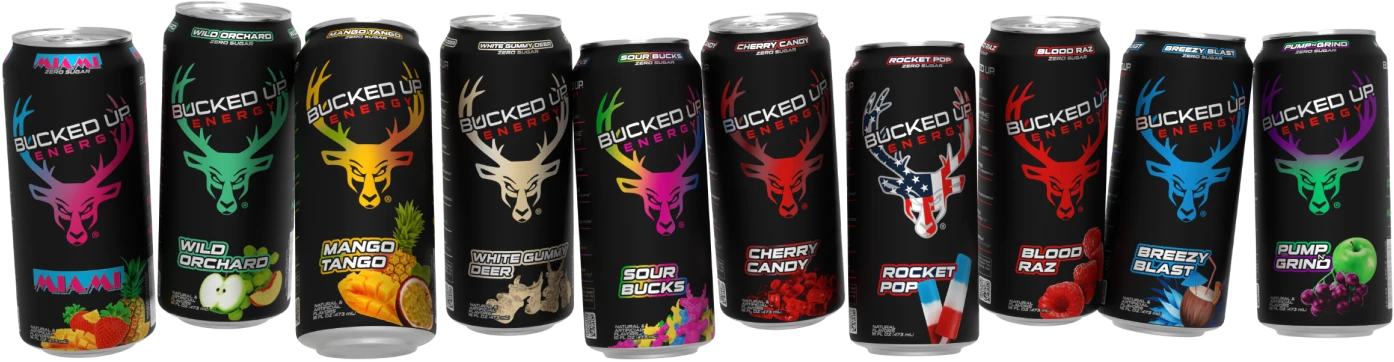
*These statements have not been evaluated by the Food and Drug Administration. This product is not intended to diagnose, treat, cure, or prevent any disease.
Frequently Asked Questions
What makes an energy drink suitable for long lasting focus and productivity rather than just physical energy?
An energy drink designed for sustained mental focus and productivity typically pairs caffeine with nootropic compounds such as Alpha-GPC, L-Theanine, or Huperzine A that support cognitive alertness and attention.* Physical energy products often prioritize fast-acting stimulants and pump-supporting ingredients like citrulline that are less relevant for desk work. For productivity purposes, the caffeine delivery mechanism matters as much as the dose.
A formula that uses delayed-release caffeine alongside a fast-acting source can support a longer, more even focus window compared to a single-source formula. Full ingredient transparency is also a practical requirement. Without knowing the exact dose of each nootropic, you cannot evaluate whether the formula aligns with research-based standards.
Is it safe to use a pre-workout mix as a daily focus supplement for desk work?
Pre-workout mixes are formulated for performance support and can be used outside of gym contexts, but daily use requires attention to total caffeine intake from all sources. The recommended daily limit for healthy adults is 400 mg of caffeine. If you already consume coffee or tea, factor that into your total before adding a pre-workout serving.
Higher-stimulant formulas like Woke AF at 333 mg or Mother Bucker at 400 mg are designed for users with an established stimulant tolerance and are not appropriate starting points for caffeine-sensitive individuals. People with cardiovascular concerns, anxiety disorders, or who are pregnant or breastfeeding should consult a healthcare provider before use. Staying well hydrated also matters, because caffeine has a mild diuretic effect and dehydration can compound fatigue rather than reduce it.
Why does ingredient transparency matter when choosing an energy drink for focus?
Ingredient transparency matters because it lets you verify that each nootropic is present at a research-aligned dose, not just listed on the label. As discussed in the labeling section, proprietary blends prevent this verification entirely. The practical impact is simple: you cannot predict whether a formula will produce meaningful results if you do not know how much of each ingredient it contains.
How do Bucked Up pre-workout mixes differ from standard commercial energy drinks for focus support?
The primary difference is label transparency and formula customization. Bucked Up lists every ingredient with its exact milligram amount across all pre-workout formulas, which means you can verify nootropic doses and caffeine sources before you buy. Commercial energy drinks vary widely in their disclosure practices, and many do not list individual nootropic doses.
Bucked Up’s product range also spans multiple stimulant levels, from the caffeine-free Non-Stimulant Pre-Workout to the 400 mg Mother Bucker. That spread allows users to match the formula to their tolerance and session length rather than accepting a fixed dose. The inclusion of AlphaSize® Alpha GPC across multiple formulas, and microencapsulated delayed-release caffeine in Mother Bucker, reflects a formulation approach oriented toward sustained cognitive support* rather than a single-spike energy model.
Final Considerations for Choosing Energy Drinks for Focus
The framework in this guide comes down to four questions. Does the label disclose every ingredient and its dose? Are the nootropic compounds present at research-aligned amounts? Does the caffeine source match your target focus window? Does the total caffeine fit within your daily tolerance and the 400 mg guideline for healthy adults?
A product that answers all four clearly is worth evaluating seriously. One that hides behind a proprietary blend fails the first question before you reach the others. The healthiest energy drinks for long lasting focus and productivity are not necessarily the ones with the most ingredients or the highest caffeine count. They are the ones that tell you exactly what you are getting and give you enough control to use it well.
No guesswork. No hidden blends. Just the full picture on every scoop. Find formulas that answer all four questions with full ingredient visibility so you can build a focus routine that fits your day.
*These statements have not been evaluated by the Food and Drug Administration. This product is not intended to diagnose, treat, cure, or prevent any disease.
References
Abe, Y. (2024). Alpha-GPC memory, focus, and brain power guide and safety. Ubie Health.
Agyeman, V., & Choung, S. (2025). Nutrition trends 2026. Good Housekeeping.
Bannan, P., Ehsani, R., & Thomason, C. (2025). Are energy drinks healthy? Eating Well.
Brainzyme. (2026). Nootropics: What they are and how to choose. Brainzyme.
Catholic Health. (2025). Hidden health risks of energy drinks. Catholic Health.
German Federal Institute for Risk Assessment. (2025). Frequently asked questions on caffeine and foods containing caffeine including energy drinks. BfR.
1 The content provided in this article is for informational purposes only and is not medical advice. Consult with a medical professional before implementing any changes to your diet, health, or exercise routines. Individual results will vary and are based on a combination of each individual’s diet, exercise, age, and health circumstances. These statements have not been evaluated by the Food and Drug Administration. This product is not intended to diagnose, treat, cure or prevent any disease.
This article was written by Ryan Gardner, CEO of Bucked Up. As the maker of Bucked Up Energy Drinks, we have a financial interest in this information. The views expressed are our own and should be read with that context in mind.


Leave a Reply