

Written by: Ryan Gardner, Owner, Managing Partner, CEO, Bucked Up
Key Takeaways
-
A steady-focus morning drink combines caffeine, amino acids, nootropics, and hydration support for consistent mental performance without sugar spikes or mystery blends.1
-
Caffeine paired with L-theanine is one of the most researched combinations for calm, jitter-free focus and improved cognitive tasks.1
-
Nootropic-enhanced formulas with ingredients like Alpha GPC and Huperzine A support mental clarity and the mind-to-muscle connection for both work and workouts.1
-
Adaptogens, electrolytes, and natural caffeine sources each add specific benefits, but transparent dosing and ingredient disclosure remain essential for consistent results.
-
Explore the full lineup of nootropic-enhanced formulas on the Bucked Up energy drink page.
Morning Drinks That Support Focus
The right morning drink depends on your caffeine tolerance, your sensitivity to stimulants, and whether you want a drink that also supports your workout. Two core categories cover most needs.
1. Caffeine Plus L-Theanine Formulations
The combination of caffeine and L-theanine is one of the most studied pairings in functional beverages. A double-blind, placebo-controlled study published in Biological Psychology found that the caffeine and L-theanine combination produced faster simple reaction times, faster numeric working-memory reaction times, and improved sentence verification accuracy compared to placebo, with participants also reporting decreased subjective ratings of mental fatigue and tiredness. A separate placebo-controlled study found that 100 mg L-theanine plus 50 mg caffeine improved performance on a demanding attention-switching task in healthy adults.
The mechanism is straightforward. EEG studies show L-theanine significantly increases alpha brain wave activity within 40 minutes of ingestion, supporting a state of relaxed wakefulness that pairs with caffeine to sustain selective attention. That pattern explains the “calm focus” effect many people want. Formulated beverages that list both ingredients with disclosed doses let you see whether the ratio looks meaningful.
*These statements have not been evaluated by the Food and Drug Administration. This product is not intended to diagnose, treat, cure, or prevent any disease.
2. Nootropic-Enhanced Energy Drinks
Nootropic ingredients like Alpha GPC (AlphaSize®) and Huperzine A now appear in many morning-focused beverages. Modern consumers scrutinize ingredient lists and want stacked functional benefits from clean, naturally sourced, minimally processed ingredients in energy and protein beverages. A drink that combines caffeine with nootropics like Alpha GPC supports mental focus and the mind-to-muscle connection,* which matters whether you are heading into a boardroom or a barbell session.1
Bucked Up pre-workout formulas include AlphaSize® Alpha GPC and, in the Mother Bucker formula, Huperzine A alongside microencapsulated delayed-release caffeine for sustained energy support.*1 Every ingredient appears on the label with its dose. No proprietary blend hides what you are actually consuming.
*These statements have not been evaluated by the Food and Drug Administration. This product is not intended to diagnose, treat, cure, or prevent any disease.
See how AlphaSize® Alpha GPC and delayed-release caffeine work together in Bucked Up formulas.
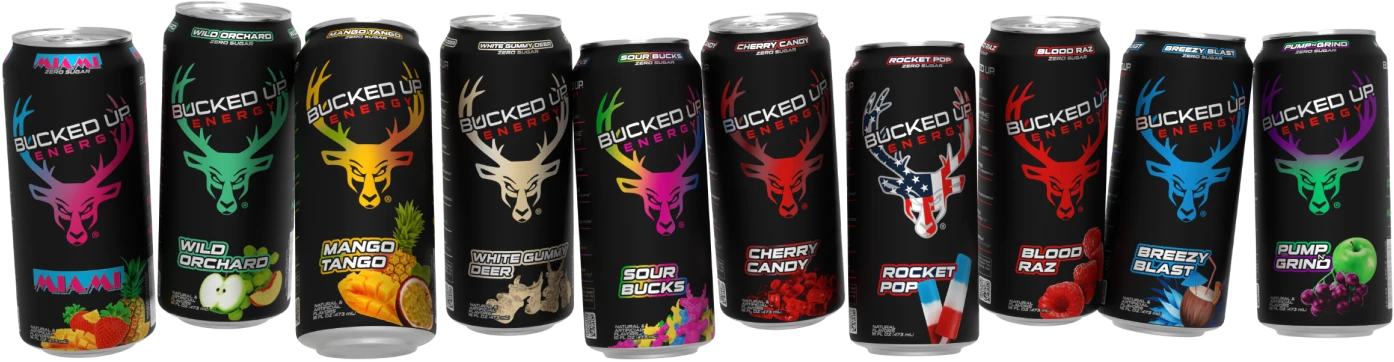
Ingredients That Support Morning Cognitive Clarity
3. Adaptogen-Infused Beverages
Adaptogens like Rhodiola rosea are gaining traction in functional morning drinks. Rhodiola rosea may help by regulating cortisol levels, counteracting exhaustion, and improving mental performance under stress, with initial effects potentially appearing within two to five days and fuller adaptogenic effects on stress resilience typically taking three to four weeks of continuous use. Rhodiola is ideally taken in the morning, about 30 minutes before breakfast, to support the natural cortisol rhythm that peaks in the early hours.
The NIH National Center for Complementary and Integrative Health notes that there is insufficient reliable evidence to determine whether rhodiola is useful for any health-related purpose, and most human research is of low-to-moderate quality. Adaptogens show promise but do not replace medical care. Evaluate any beverage claiming adaptogen benefits by checking whether the dose matches studied ranges and whether the extract is standardized.
*These statements have not been evaluated by the Food and Drug Administration. This product is not intended to diagnose, treat, cure, or prevent any disease.
4. Electrolyte-Forward Functional Drinks
Dehydration directly reduces morning alertness. Electrolyte-infused energy drink variants blend sodium and potassium with caffeine to merge hydration with stimulation, aligning with morning productivity use cases. Himalayan Rock Salt with trace minerals, as used in Bucked Up formulas, supports electrolyte balance* and provides essential minerals that plain water does not replace.1
*These statements have not been evaluated by the Food and Drug Administration. This product is not intended to diagnose, treat, cure, or prevent any disease.
Healthiest Ways to Support Morning Energy
5. Natural Caffeine Sources
Beverage companies are reformulating energy drink product lines to replace synthetic caffeine with guarana, green tea, and yerba mate extracts in response to consumer demand for recognizable, plant-sourced ingredients, with clean-label claims on packaging increasing retail trial rates among health-conscious consumers. Green tea delivers caffeine alongside naturally occurring L-theanine, which helps explain its reputation for a smoother energy curve than coffee alone.
The natural energy drinks segment is projected to grow at a CAGR of 8.6% from 2026 to 2034, as consumers favor products without synthetic additives, artificial sweeteners, or high levels of processed sugar. The market continues to move toward clearer labels, and more consumers now read and interpret ingredient panels.
6. Amino Acid and B-Vitamin Stacks
Traditional energy drinks can deliver high levels of caffeine per serving along with high sugar concentrations. Amino acid-based formulations, by contrast, support cellular metabolic energy production* through ingredients like Taurine and B12 (as Methylcobalamin), which supports neurological function and energy metabolism.*1 Bucked Up’s standard pre-workout includes both, alongside a disclosed 200 mg caffeine dose, so you know exactly what you are working with.
*These statements have not been evaluated by the Food and Drug Administration. This product is not intended to diagnose, treat, cure, or prevent any disease.
DIY Morning Drinks vs. Formulated Beverages with Transparent Dosing
Matcha, coffee with an L-theanine capsule, and adaptogenic teas all qualify as legitimate morning options. The limitation is dose control. A cup of matcha typically delivers 30–70 mg of caffeine but can contain up to 180 mg depending on the amount of powder used, and the L-theanine content varies by grade and steep time. You end up guessing.
Roughly 73% of consumers are willing to pay more for beverages made with ingredients they recognize and trust, favoring clean, naturally sourced, minimally processed options in energy drinks. That preference for recognizable ingredients highlights why transparent labeling matters. A formulated beverage with disclosed doses removes much of the guesswork.
Bucked Up’s Mother Bucker pre-workout, for example, uses 300 mg Caffeine Anhydrous plus 100 mg Microencapsulated Delayed-Release Caffeine to support prolonged energy levels through training.*1 That combination represents a specific, disclosed mechanism. In 2024, Monster Beverage secured seven patents for a microencapsulation technique aimed at extending the effects of caffeine, supporting formulations for sustained energy without rapid crashes, which signals that delayed-release caffeine is a formulation direction the broader industry now validates.
DIY stacks can work. Formulated beverages with full ingredient disclosure tend to deliver more consistent experiences. That is the trade-off.
*These statements have not been evaluated by the Food and Drug Administration. This product is not intended to diagnose, treat, cure, or prevent any disease.
Compare disclosed doses and delayed-release caffeine options across the Bucked Up lineup.
Hydration-First Morning Ritual for Sustained Performance
Whether you choose a DIY approach or a formulated beverage, hydration sets the baseline for everything else. Before any caffeine hits your system, your body needs water. As noted earlier, electrolyte-infused drinks address both hydration and energy in a single serving. Sodium, as included in Bucked Up formulas, helps maintain proper fluid balance, nerve function, and muscle contractions.*1 The trace minerals in Himalayan Rock Salt, the same ingredient used in Bucked Up formulas, fill gaps that plain water leaves open.
A practical morning ritual looks simple. Drink 16 oz of water first, then have your functional beverage of choice. The hydration foundation helps every other ingredient work more effectively.
*These statements have not been evaluated by the Food and Drug Administration. This product is not intended to diagnose, treat, cure, or prevent any disease.
Addressing Kidney and Creatinine Concerns
A common question about pre-workouts and functional energy drinks involves kidney health, particularly around creatinine levels. Creatinine is a waste product measured in blood tests to assess kidney function, and some people worry that supplements might elevate it. The confusion often stems from creatine supplementation, which can cause temporary creatinine increases in lab work even when kidney function is normal, but Bucked Up pre-workouts do not contain creatine. BCAA supplementation at typical doses is generally considered safe and does not carry the same creatinine concern. If you have specific kidney health concerns or existing kidney conditions, consult a qualified healthcare provider before adding any supplement to your routine.
How to Choose a Bucked Up Formula Based on Caffeine Tolerance
Not everyone benefits from 400 mg of caffeine at 6 a.m. A simple tolerance-based framework helps you match your intake to a Bucked Up option.
Low tolerance or caffeine-sensitive (under 150 mg per day): If you fall in this range, caffeine can easily overshoot and cause jitters or anxiety. The Bucked Up Non-Stimulant Pre-Workout exists for this situation and delivers nootropic and performance ingredients such as AlphaSize® Alpha GPC for focus support,* Beta-Alanine for endurance support,* and Himalayan Rock Salt for electrolyte balance* without any stimulant load.1 You get functional benefits without the risk of overstimulation.
Moderate tolerance (150 to 250 mg per day): Once your system handles moderate caffeine without side effects, the standard Bucked Up pre-workout at 200 mg becomes a logical entry point. It sits near the middle of the moderate range and supports energy, focus, pump, and endurance* without pushing you toward the upper limit where side effects become more likely.1
Developed tolerance (250 to 350 mg per day): Woke AF at 333 mg caffeine suits those with a clearly developed tolerance to stimulants. The formula includes AlphaSize® Alpha GPC and Taurine for cognitive support,* which helps align the higher stimulant load with focus rather than just intensity.1
High tolerance (350 mg and above): Mother Bucker at 400 mg total caffeine, from 300 mg Caffeine Anhydrous plus 100 mg Microencapsulated Delayed-Release Caffeine, supports prolonged energy levels through training.*1 Alpha GPC and Huperzine A add focus and mind-to-muscle connection support,* which helps channel that higher caffeine intake into productive work or training.1
High caffeine intake at 6 to 9 mg per kg of body weight can cause overstimulation and negative effects, while moderate intake at 3 to 6 mg per kg may support performance, which reinforces the case for starting at the lower end and adjusting based on your response. If you weigh 180 lbs, 3 mg per kg puts your moderate threshold around 245 mg. Treat that number as a reference point rather than a hard ceiling.
Use the Bucked Up store finder to locate a retailer near you.
*These statements have not been evaluated by the Food and Drug Administration. This product is not intended to diagnose, treat, cure, or prevent any disease.
Conclusion: Using Ingredient Transparency to Shape Your Morning Ritual
The morning energy drink category has moved well past sugar water and synthetic caffeine. Consumers increasingly seek energy drinks that deliver benefits beyond basic energy, including enhanced focus, improved cognitive function, hydration, and athletic performance.1 The science behind L-theanine and caffeine synergy, adaptogen timing, nootropic stacking, and electrolyte-first hydration gives you a practical framework for evaluating what is in your morning drink and whether the doses look meaningful.
Bucked Up’s approach focuses on full ingredient disclosure, dosing ingredients at levels that have been studied, and building formulas that support energy, focus, pump, and endurance* across a range of caffeine tolerances.1 From the stimulant-free option to Mother Bucker’s delayed-release caffeine stack, the lineup offers a starting point for many Everyday Achievers.
Find your starting point in the Bucked Up lineup.
*These statements have not been evaluated by the Food and Drug Administration. This product is not intended to diagnose, treat, cure, or prevent any disease.
Frequently Asked Questions
What is the best morning drink for focus and sustained energy?
No single drink fits every person, but the most consistently studied approach combines caffeine with L-theanine. This pairing supports a state of relaxed alertness, with L-theanine helping to moderate the jittery edge that caffeine alone can produce. Formulated beverages that disclose both ingredients and their doses give you a reliable way to evaluate whether the ratio is meaningful.
For those who also train in the morning, a pre-workout that includes nootropic ingredients like Alpha GPC alongside caffeine can support both mental focus and physical performance. The right choice depends on your caffeine tolerance, your morning schedule, and whether you want a drink that doubles as workout fuel.
What drinks support cognitive clarity in the morning?
Several functional ingredients are associated with supporting cognitive clarity. L-theanine paired with caffeine is the most studied combination for attention and alertness. Nootropics like Alpha GPC (AlphaSize®) and Huperzine A are included in performance-focused formulas specifically to support the mind-to-muscle connection and mental focus.
Adaptogens like Rhodiola rosea have been studied for mental fatigue support, though the evidence base is still developing and most research uses standardized capsule extracts rather than beverage formats. Electrolyte balance also plays a foundational role. Dehydration directly reduces morning alertness, and drinks that include sodium and trace minerals support fluid balance from the start of the day. A drink that addresses hydration, caffeine, and nootropic support together covers the most ground.
What is the healthiest way to get energy in the morning?
Start with hydration. Sixteen ounces of water before any caffeine sets a better baseline than caffeine on an empty, dehydrated system. From there, a balanced approach to morning energy involves a beverage with a disclosed caffeine dose appropriate for your tolerance, no excessive added sugar, and functional supporting ingredients like B vitamins, amino acids, and electrolytes.
Natural caffeine sources like green tea deliver caffeine alongside naturally occurring compounds that may smooth the energy curve. For those who train in the morning, a pre-workout with transparent ingredient labeling and a caffeine dose matched to your tolerance level supports both energy and workout performance without requiring you to guess what you are consuming. Avoid products that rely on proprietary blends where individual ingredient doses are hidden.
How does delayed-release caffeine differ from standard caffeine in morning drinks?
Standard caffeine anhydrous absorbs quickly and produces a relatively fast onset of energy. Microencapsulated delayed-release caffeine uses a coating process to slow absorption, releasing caffeine over a longer window. This approach is designed to support more prolonged energy levels through a training session or a long morning of work, rather than delivering all stimulant effect in the first hour.
Bucked Up’s Mother Bucker formula combines both forms: 300 mg Caffeine Anhydrous for immediate energy support and 100 mg Microencapsulated Delayed-Release Caffeine for sustained energy support. This dual-source approach is a formulation strategy that the broader industry has been moving toward, with major beverage companies filing patents for similar microencapsulation techniques. Whether this format suits you depends on your caffeine tolerance and how long your morning demands sustained focus.
Are Bucked Up pre-workouts safe for daily morning use?
Bucked Up products are manufactured in GMP-certified facilities in the USA, which reflects manufacturing quality standards. Whether any pre-workout is appropriate for daily use depends on individual factors including caffeine sensitivity, overall daily caffeine intake from all sources, and any underlying health conditions. Bucked Up offers a range of options across caffeine levels, including a stimulant-free pre-workout for those who are caffeine-sensitive or want to cycle off stimulants.
For individuals with specific health concerns, particularly around kidney function, blood pressure, or cardiovascular health, consulting a qualified healthcare provider before starting any supplement routine is the right call. Ingredient transparency, as provided by Bucked Up’s fully disclosed labels, makes it easier for you and your healthcare provider to evaluate exactly what you are consuming.
1 The content provided in this article is for informational purposes only and is not medical advice. Consult with a medical professional before implementing any changes to your diet, health, or exercise routines. Individual results will vary and are based on a combination of each individual’s diet, exercise, age, and health circumstances. These statements have not been evaluated by the Food and Drug Administration. This product is not intended to diagnose, treat, cure or prevent any disease.
This article was written by Ryan Gardner, CEO of Bucked Up. As the maker of Bucked Up Energy Drinks, we have a financial interest in this information. The views expressed are our own and should be read with that context in mind.


Leave a Reply