

Written by: Ryan Gardner, Owner, Managing Partner, CEO, Bucked Up
Key Takeaways
- Standard energy drinks often cause crashes because fast-release caffeine and high sugar create sharp spikes and drops in energy.
- Sustained energy usually comes from formulas that combine immediate and delayed-release caffeine, L-theanine for smoother stimulation, and nootropics for extended focus.
- Label transparency matters. Check disclosed amounts of caffeine forms, complementary compounds, and B vitamins instead of relying on total caffeine milligrams alone.
- The right energy drink depends on your tolerance, schedule, and goals. Moderate caffeine with delayed-release support often fits all-day performance without heavy rebound fatigue.
- Bucked Up Performance Energy Drinks use sustained-release caffeine and nootropic support to help you power through long shifts and training sessions.1 Explore sustained-energy formulas to find the right fit for your routine.
Why the Afternoon Slump Hits So Hard
Standard energy drinks often rely on rapid-release caffeine anhydrous, high sugar loads, or both. The caffeine hits fast, adenosine blockade kicks in, and you feel sharp for a short window. Then the caffeine clears, adenosine rebounds, and blood sugar swings compound the drop. The result is the familiar slump that makes the second half of a long shift or a late training session feel like a slog. Low glycemic index foods and ingredients that prevent blood sugar spikes are associated with steadier energy release, so formulation choices beyond raw caffeine content matter. This guide walks through the science of sustained-release formulations, a practical decision framework, and how to evaluate any energy drink before you buy it.
Quick Overview: What Actually Creates Sustained Energy
Three formulation levers separate crash-prone drinks from sustained-energy options. First, caffeine source and release timing. Microencapsulated or delayed-release caffeine extends the absorption window compared to standard anhydrous forms. Second, complementary compounds. L-theanine buffers caffeine’s excitatory effects, and the research on this pairing appears in the decision framework below. Third, nootropic pairings like Alpha GPC that support mental focus and alertness* independent of the stimulant pathway. Drinks that address all three levers tend to deliver a smoother, longer arc of energy support* than those relying on caffeine dose alone.1
How Energy Drink Formulations Have Evolved Toward Sustained Energy
These formulation principles reflect a broader shift in how the energy drink category is evolving. Natural and organic energy drinks are expanding at a 7.12% CAGR through 2031, outpacing the overall energy drinks market growth rate of 5.84% CAGR, driven by consumer preference for clean-label claims and plant-based caffeine sources such as yerba mate and guayusa. That growth signals a broad move away from high-sugar, synthetic-additive formulas toward products built around functional ingredients with transparent labels.
Brands are combining adaptogens and botanical caffeine in energy drinks with claims of stress reduction and mental clarity, indicating a market shift toward sustained-energy positioning. Adaptogens such as ashwagandha and lion’s mane are appearing more often in beverages for energy support, stress reduction, and mood support. The category has moved well past the era of simple sugar-and-caffeine cans.
Decision Framework: Best Energy Drinks With Long Lasting Energy, No Crash
Evaluating an energy drink for sustained energy* works best when you look at three ingredient categories together, not in isolation.
Caffeine source and release timing. Caffeine anhydrous absorbs quickly and creates a fast peak. Microencapsulated delayed-release caffeine is designed to extend absorption over a longer window, which supports more gradual energy levels* instead of a sharp spike. Some formulas combine both. An immediate-release portion supports fast onset, and a delayed-release portion supports energy later in a session.1 Consumers are increasingly favoring natural stimulant sources such as green tea extract, guarana, and yerba mate over synthetic caffeine in energy drink formulations.
Complementary compounds. A double-blind, placebo-controlled study found that the caffeine and L-theanine combination produced significantly faster simple reaction times, faster numeric working-memory reaction times, improved sentence verification accuracy, and lower self-rated mental fatigue and tiredness compared to placebo. The commonly cited ratio in human studies is 2:1 L-theanine to caffeine. Paraxanthine, the primary active metabolite of caffeine, is being investigated in combination with L-theanine because it provides cognitive benefits without the adverse effects associated with caffeine such as jitteriness and sleep disturbance, and exhibits more predictable metabolism across individuals.
Nootropic pairings. Ingredients like Alpha GPC support mental focus and alertness* through pathways separate from caffeine.1 Huperzine A supports memory recall and focus*.1 These compounds extend the functional benefit of an energy drink beyond raw stimulation into cognitive territory, which matters for long shifts and extended training sessions.
Which Energy Drink Lasts the Longest
Duration depends more on release timing than on total caffeine. A drink with 300 mg of fast-release caffeine anhydrous will usually peak and clear faster than a formula that splits its caffeine between an immediate-release and a microencapsulated delayed-release fraction. Pharmacokinetic data show that L-theanine and caffeine reach peak plasma concentrations between 45 and 60 minutes with synchronized absorption, producing cognitive benefits that typically last 3 to 5 hours. Formulas that layer a delayed-release caffeine component on top of that window can extend the effective duration further. When you compare which energy drink lasts the longest, look for explicit label disclosure of caffeine form, not just total milligrams.
Energy Drink Without Crash for All-Day Use
All-day energy support* works best when the formulation accounts for the full arc of a workday or training block, not just the first two hours. L-theanine combined with caffeine improves mental alertness and selective attention while reducing jittery overstimulation, with effects that, as noted above, typically last 3 to 5 hours.1 For all-day use, practical criteria include moderate total caffeine to avoid tolerance accumulation, a delayed-release component, L-theanine or a comparable buffer, and B vitamins to support energy metabolism*.1 Manufacturers are reformulating energy drinks with natural caffeine sources such as green coffee beans, guarana, and yerba mate, alongside B-complex vitamins, electrolytes, and magnesium to support functional benefits including mental alertness and physical performance.
Best Energy Drink for Staying Up All Night
Extended overnight performance is a specific use case that calls for honest self-assessment before you look at any label. Caffeine sensitivity varies significantly by individual, and higher total doses carry greater risk of jitteriness, disrupted recovery, and rebound fatigue. For users who need to stay sharp through overnight shifts or extended sessions, relevant formulation criteria include a delayed-release caffeine component to support energy levels* in the later hours, nootropic support for sustained mental focus and alertness*, and electrolytes to support hydration. An Innova survey found that 60% of Gen Z and millennials are concerned about their mental health, with energy listed as the top area they want to improve, followed by focus, anxiety, and memory. Overnight use cases benefit most from formulas that address focus* alongside energy*, not just stimulant load.
How to Evaluate Any Energy Drink
Four criteria apply regardless of brand or flavor, and each one builds on the previous step. Start by reading the full ingredient label, not just the caffeine number. Next, identify whether caffeine appears as anhydrous only or whether a delayed-release or microencapsulated form also appears, because release timing influences duration more than dose. Then check for complementary compounds like L-theanine, taurine, or B vitamins that support the energy arc*. Finally, assess label transparency. Proprietary blends can obscure individual ingredient amounts, which makes it impossible to evaluate whether any compound is present at a meaningful level. 68% of U.S. consumers expressed willingness to pay a premium for energy drinks with recognizable, natural ingredients, according to a 2023 survey by the Hartman Group. Transparency is not just a marketing claim. It is the only way to actually evaluate what you are consuming.
Finding Your Personal Fit
Tolerance, schedule, and goals determine which formulation profile fits best. Lower caffeine tolerance or evening use cases often call for moderate total caffeine with strong nootropic support and a delayed-release component. Higher tolerance or pre-training use cases may support a higher total caffeine load split between immediate and delayed-release fractions.
Bucked Up Performance Energy Drinks follow this framework with transparent ingredient labels, sustained-release caffeine to support prolonged energy levels*, and nootropic compounds to support mental focus and alertness* through long sessions.1 For Everyday Achievers who train regularly or work extended shifts and have experienced the afternoon slump from standard options, that formulation profile targets the core problem directly. Find the formulation that fits your schedule.
Practical Comparison of Leading Options
Once you understand your personal fit criteria, the next step is evaluating how different products in the market stack up. The energy drink market in 2025 and 2026 includes a wide range of options across the sustained-energy positioning. Energy drinks are commonly formulated with caffeine, taurine, B vitamins, and amino acids to support physical performance and mental alertness, with newer functional products also incorporating adaptogens such as lion’s mane, cordyceps, ashwagandha, and guarana to promote sustained focus.
When you compare options, focus on caffeine form and release timing, presence and dosage of complementary compounds, label transparency, total caffeine relative to your personal tolerance, and convenience of format. Drinks that disclose every ingredient amount allow you to make an informed evaluation. Drinks that use proprietary blends require you to take the formulator’s word for it. That distinction matters when you want a formulation that supports your specific energy and focus needs* without the crash.
Crash-free ingredients such as paraxanthine are gaining popularity in newer beverage formulations as consumers moderate caffeine intake. Living Essentials Marketing’s Gamer Shot energy shots are formulated with B vitamins, taurine, and amino acids to provide sustained energy and concentration without causing jitteriness or energy crashes, targeting gamers. The category continues to evolve, and the most practical approach is to evaluate each option against the framework above instead of defaulting to brand recognition or flavor preference.
Ready to Make the Switch to Sustained Energy?
Recurring afternoon slumps usually signal that your current energy drink is not built for sustained energy support*. Bucked Up Performance Energy Drinks are available at retailers nationwide. Use the store finder to locate Bucked Up near you and compare the label against the criteria in this guide.
Common Mistakes That Lead to Crashes
Choosing an energy drink based on flavor alone or total caffeine milligrams is the most common formulation mistake. Flavor tells you nothing about release timing, and total caffeine tells you about peak intensity, not duration, which explains why a 300 mg fast-release formula will spike harder and clear faster than a 200 mg formula that combines immediate and delayed-release caffeine with L-theanine. This focus on the wrong metrics often leads directly to the second mistake: ignoring label transparency. If you cannot see individual ingredient amounts, you cannot evaluate whether any compound is present at a level that supports the claimed benefit. The third mistake is ignoring personal tolerance. The European Food Safety Authority has established a safe daily intake level of 400 mg of caffeine for healthy adults, and individual responses vary significantly below that threshold. Start with a formulation matched to your current tolerance, not the highest caffeine number on the shelf.
Shop Bucked Up Performance Energy Drinks
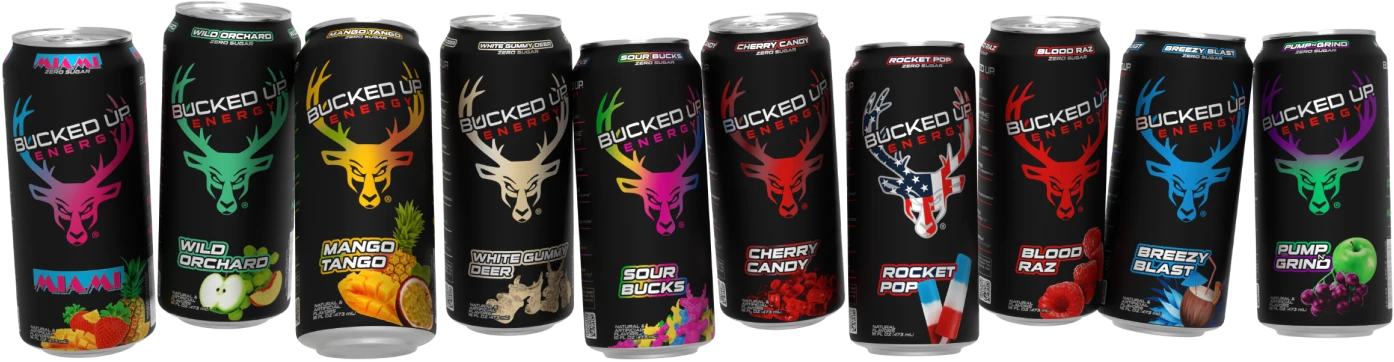
Bucked Up Performance Energy Drinks are manufactured in GMP-certified facilities in the USA, with fully disclosed ingredient labels so you can evaluate exactly what you are consuming. The formulation is built to support sustained energy levels* and mental focus and alertness* through long training sessions and extended shifts.1 No proprietary blend guesswork. No mystery doses. Stock up on transparent, GMP-certified formulas.
Final Evaluation Framework Recap
Energy drinks that support long lasting energy without a heavy crash usually share four characteristics. They use transparent ingredient labels with disclosed amounts, a caffeine strategy that includes a delayed-release component alongside immediate-release caffeine, complementary compounds like L-theanine that support the energy arc* and reduce overstimulation, and nootropic ingredients that support mental focus and alertness* beyond the stimulant window.1 Apply those four criteria to any label and you can usually tell within 60 seconds whether a product is built for sustained performance or just a fast spike. Bucked Up Performance Energy Drinks are formulated to meet all four. See the four-criteria framework in action.
*These statements have not been evaluated by the Food and Drug Administration. This product is not intended to diagnose, treat, cure, or prevent any disease.
References
Goldman Laboratories. (2024). Vitamins for tiredness: The ultimate guide to fighting daily fatigue. https://goldmanlaboratories.com/blogs/blog/vitamins-for-tiredness-the-ultimate-guide-to-fighting-daily-fatigue
Grand View Research. (2025). Energy drinks market size, share & trends analysis report. https://grandviewresearch.com/industry-analysis/energy-drinks-market
Hartman Group. (2023). Consumer survey on natural ingredients in energy drinks [cited in Market Data Forecast]. https://marketdataforecast.com/market-reports/energy-drinks-market
Haskell, C. F., Kennedy, D. O., Milne, A. L., Wesnes, K. A., & Scholey, A. B. (2008). The effects of L-theanine, caffeine and their combination on cognition and mood. Biological Psychology, 77(2), 113–122. [cited in Rthm.com] https://rthm.com/resources/blogs/caffphenol-supplement-guide
Innova Market Insights. (2025). Top food and beverage trends for 2026 [cited in Food Navigator]. https://foodnavigator.com/Article/2025/12/09/top-10-food-and-beverage-trends-for-2026
Market Data Forecast. (2026, January). Energy drinks market report. https://marketdataforecast.com/market-reports/energy-drinks-market
Mordor Intelligence. (2025). Energy drinks market: Growth, trends, and forecasts. https://mordorintelligence.com/industry-reports/energy-drinks-market
Owen, G. N., Parnell, H., De Bruin, E. A., & Rycroft, J. A. (2008). The combined effects of L-theanine and caffeine on cognitive performance and mood. Nutritional Neuroscience, 11(4), 193–198. [cited in Mind Lab Pro] https://mindlabpro.com/blogs/nootropics/coffee-with-l-theanine
TrialX. (2025). L-theanine and paraxanthine for sustained attention (NCT07189442). https://trialx.com/clinical-trials/listings/333402/l-theanine-and-paraxanthine-for
Frequently Asked Questions
What makes an energy drink less likely to cause a crash?
The primary driver of energy crashes is rapid caffeine absorption followed by a sharp clearance, often compounded by blood sugar fluctuations from high-sugar formulas. Energy drinks that are less likely to cause a crash typically use a combination of immediate-release and delayed-release caffeine to extend the absorption window, include complementary compounds like L-theanine to buffer overstimulation, and avoid excessive sugar loads that contribute to blood sugar swings. Transparent ingredient labels that disclose individual amounts allow you to verify whether these components are actually present at meaningful levels.
How does Bucked Up approach sustained energy in its formulations?
Bucked Up formulates products with full ingredient transparency, so every compound and its amount appears on the label. Bucked Up Performance Energy Drinks apply a similar philosophy with formulations built to support sustained energy levels* and mental focus and alertness* rather than relying on a single fast-release caffeine hit. All Bucked Up products are manufactured in GMP-certified facilities in the USA.
Is L-theanine important in an energy drink for long-lasting focus?
L-theanine is one of the most researched complementary compounds for caffeine-based energy formulations. Multiple placebo-controlled studies show that L-theanine combined with caffeine supports reaction time, attention accuracy, and reduced mental fatigue compared to caffeine alone. L-theanine promotes alpha-wave brain activity associated with relaxed wakefulness, which can offset caffeine-induced overstimulation and support a smoother, more sustained focus arc*. The commonly studied ratio in human trials is 2:1 L-theanine to caffeine. When you evaluate an energy drink for all-day focus support*, checking whether L-theanine is present and disclosed at a meaningful amount is a practical first step.
How much caffeine is appropriate for all-day energy support without a crash?
The right caffeine amount depends on individual tolerance, body weight in lbs, and the timing of consumption. The European Food Safety Authority has established a safe daily intake level of 400 mg of caffeine for healthy adults, and individual responses vary significantly below that threshold. For all-day use, a moderate total caffeine amount split between immediate and delayed-release forms tends to support a more even energy arc* than a single large dose of fast-release caffeine. Starting at a level matched to your current tolerance and adjusting based on response is a more practical approach than defaulting to the highest milligram count available.
Where can I find Bucked Up Performance Energy Drinks?
Bucked Up Performance Energy Drinks are available at retailers across the United States. You can use the Bucked Up store finder at energy.buckedup.com/where-to-buy to locate the nearest retail location. Cases are also available for direct purchase at buckedup.com, which makes it straightforward to stock up for a full week of training sessions or long shifts without running out mid-week.
1 The content provided in this article is for informational purposes only and is not medical advice. Consult with a medical professional before implementing any changes to your diet, health, or exercise routines.
Individual results will vary and are based on a combination of each individual’s diet, exercise, age, and health circumstances.
These statements have not been evaluated by the Food and Drug Administration. This product is not intended to diagnose, treat, cure or prevent any disease.
This article was written by Ryan Gardner, CEO of Bucked Up. As the maker of Bucked Up Energy Drinks, we have a financial interest in this information. The views expressed are our own and should be read with that context in mind.


Leave a Reply