

Written by: Ryan Gardner, Owner, Managing Partner, CEO, Bucked Up
Key Takeaways for Jitter-Free Focus
-
Many energy drinks cause jitters and crashes because of high caffeine doses and undisclosed proprietary blends. Options that use moderate caffeine (80-150 mg) paired with L-theanine in a zero-sugar format can support calm, sustained focus.
-
Full label transparency matters. Check for disclosed caffeine and L-theanine amounts, zero sugar, and no hidden blends so you can verify research-backed dosing.
-
Ingredients like AlphaSize Alpha GPC, Huperzine A, and Taurine support focus through neurotransmitter pathways instead of adding more stimulation, which helps extend alertness without overload.1
-
Mixable powders provide dosing flexibility and full ingredient visibility. That combination can make them a strong choice over many RTD cans for all-day use and caffeine-sensitive individuals.
-
Ready to upgrade your focus routine? Explore Bucked Up’s transparent-label energy options and find the formula built for Everyday Achievers.
Product Overview: Moderate Caffeine Plus Nootropics for Calm Alertness
Caffeine sensitivity is common and can show up as jitters, nausea, or stomach upset even at low doses. Northwestern Medicine notes that some people experience caffeine sensitivity where even small amounts can cause these effects, and that sensitivity sits on a wide spectrum. For many people, a profile built around 80 to 150 mg caffeine, paired with a nootropic like L-theanine in a zero-sugar format, supports focus without overstimulation.1
This range lines up with how caffeine behaves in the body. Caffeine is absorbed in roughly 45 minutes and carries a half-life of approximately five hours, so a moderate dose creates a useful window of alertness without stacking stimulation late into the evening. The CDC notes that moderate caffeine consumption up to 400 mg per day can be part of a healthy diet for most adults, but research on calm, sustained focus usually points to lower single-serving amounts.
L-theanine changes how that caffeine feels. Combining caffeine with L-theanine produces a state of relaxed wakefulness, with L-theanine promoting alpha-wave activity and supporting inhibitory neurotransmitters such as GABA while caffeine increases excitatory signaling. The result is alertness with a smoother edge.
Ready to find a format that fits your tolerance? Browse formulas in the 80-200 mg caffeine range built for Everyday Achievers.
How to Spot Jitter-Free Energy Options on the Label
Evaluating any energy drink or powder for jitter-free performance comes down to a short checklist of label criteria. Here is what to look for.
Caffeine amount, disclosed on the label. A product that lists total caffeine as part of a proprietary blend gives you no way to know whether you are getting 80 mg or 200 mg. Full disclosure matters. For many caffeine-sensitive users, 80 to 150 mg per serving is the target range.
L-theanine amount, also disclosed. Knowing the caffeine dose is only half of the equation, because the nootropic pairing shapes whether that caffeine feels smooth or jittery. Multiple randomized controlled trials show that caffeine (100 to 200 mg) plus L-theanine improves focused attention, reduces mind-wandering, and produces an alert-calm state that neither compound achieves alone, with most positive trials using a roughly 1:2 caffeine-to-L-theanine ratio. A product that lists L-theanine without specifying the dose cannot be evaluated against that evidence base.
Sugar content. Consumers are increasingly opting for low-sugar, sugar-free, and naturally sourced energy drinks as health awareness rises. Sugar-driven energy spikes create a separate crash on top of the caffeine curve, so zero-sugar formats remove one more variable.
Afternoon timing. Timing affects how caffeine interacts with sleep. A 2025 randomized controlled trial indicated that 100 mg of caffeine can be consumed up to four hours before bedtime without major disruption, while 400 mg consumed within 12 hours of bedtime negatively impacts sleep. If your second dose of the day falls after 2 p.m., a lower-caffeine or stimulant-free option deserves a look.
The 2:1 L-theanine-to-caffeine ratio as a benchmark. A randomized placebo-controlled trial in 44 healthy young adults found that 97 mg L-theanine plus 40 mg caffeine improved task-switching accuracy, subjective alertness, and reduced tiredness 20 to 70 minutes post-dose compared with placebo. That ratio works as a practical starting point rather than a rigid rule, and it gives you a reference when reading labels.
Brain-Fog Support Ingredients That Do Not Pile on Stimulants
Caffeine supports wakefulness by blocking adenosine receptors to inhibit the centrally depressant effects of adenosine and enhancing the release of acetylcholine. That mechanism is well understood. A supporting cast of nootropics can then extend and sharpen focus without adding more stimulant load.
AlphaSize Alpha GPC. Alpha-GPC is a choline compound used to support mental performance during cognitively demanding work, and brain imaging studies show that nootropic combinations influence alpha brain wave activity associated with relaxed alertness. Bucked Up’s standard pre-workout includes AlphaSize Alpha GPC 50%, which is included to support mental focus and the mind-to-muscle connection.*1
Huperzine A. Bucked Up’s Mother Bucker formula includes Huperzine A, a nootropic studied for supporting memory recall and focus.*1 It works through a different pathway than caffeine, so it complements stimulation instead of duplicating it.
L-theanine’s alpha-wave mechanism. L-theanine raises alpha brain waves to promote wakeful relaxation without sedation and is commonly stacked with caffeine to deliver smoother, sustained energy without jitters or afternoon fatigue.1 A 2019 review found that 200 to 400 mg of L-theanine per day could help ease anxiety and stress, with some effects occurring within a few hours after intake.
Taurine. Taurine appears in Bucked Up’s standard pre-workout and may support cognitive functions.*1 It contributes to overall formula balance without increasing stimulant load.
The pattern across these ingredients is consistent. They support focus through neurotransmitter modulation and brain energy pathways instead of relying on more stimulants. That approach helps separate a formula designed for sustained attention from one built for a short-term spike. Even a strong ingredient profile still needs the right format so you can verify doses and adjust to your tolerance.
Choosing Between RTD Cans and Mixable Powders for Daily Use
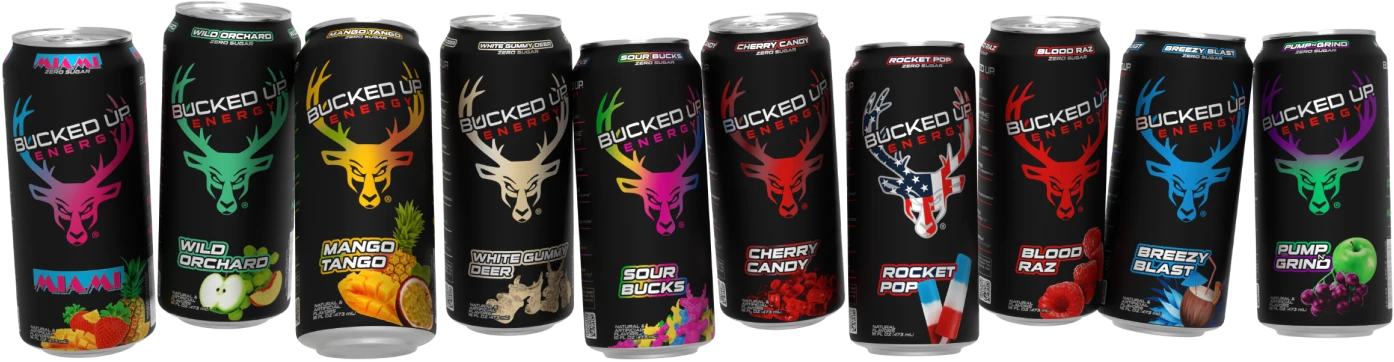
RTD cans excel at convenience. You grab one, open it, and you are ready. For many people that simplicity drives the decision, but convenience can trade off with dosing precision and transparency.
The energy drink category is expanding into cognitive-enhancement variants that incorporate nootropics to deliver sustained alertness without crashes, yet traditional energy drinks still held 43.58% of the 2025 market share. That share suggests many shelf-facing products were formulated before nootropic-pairing became common. Some RTD cans list L-theanine or Alpha-GPC without specifying the dose, which makes it hard to know whether the amount lines up with research-backed ranges.
Mixable powders offer a different value proposition. With a scoop-and-mix format, you can adjust serving size, see the full ingredient list on the label, and avoid proprietary blends that obscure what you are actually consuming. For caffeine-sensitive users who want to start low and dial in slowly, that flexibility matters.
Bucked Up’s standard pre-workout contains 200 mg caffeine per serving with full ingredient disclosure, including AlphaSize Alpha GPC and Taurine for focus support.* The Non-Stimulant Pre-Workout removes caffeine entirely while retaining Citrulline Malate, AlphaSize, Beta-Alanine, Taurine, and Vitamin B12, which makes it a viable option for afternoon sessions or for users who want to separate caffeine intake from workout nutrition.
No single format works for everyone. Your caffeine tolerance, timing needs, and preference for dose control all shape whether a can or a powder fits better.
Compare powder and RTD options to find the format that fits your routine.
Sensitivity Self-Assessment Framework
Answering a few quick questions can help you narrow down which products fit your tolerance. This framework is a practical filter, not a diagnostic tool.
1. How do you typically respond to a standard cup of coffee (roughly 95 mg caffeine)? If you notice jitters, elevated heart rate, or anxiety, you likely fall into the caffeine-sensitive category. Caffeine tolerance develops over time and individual responses vary significantly due to CYP1A2 gene variants affecting metabolism. Sensitive users can look for products in the 80 to 100 mg range or consider stimulant-free options.
2. What time of day do you need focus support? If your primary need is afternoon or evening, a lower-caffeine or caffeine-free format helps protect sleep quality, especially given caffeine’s five-hour half-life. Evening consumption of 200 mg caffeine is linked to a 7-minute increase in sleep latency, a 5% reduction in sleep efficiency, and a 28-minute decrease in sleep duration.
3. Do you currently consume caffeine daily? Regular consumers tend to have a higher functional tolerance. Effects of caffeine on sleep are generally less pronounced in regular coffee drinkers compared to occasional users. That pattern suggests habitual consumers may need a slightly higher dose to feel the same focus benefit.
4. Are you new to pre-workout supplements? If yes, starting with a moderate-caffeine formula (around 100 to 200 mg) with disclosed nootropic support gives you a reasonable entry point. Bucked Up’s standard pre-workout at 200 mg sits at the upper edge of that moderate range, which lets regular caffeine users gauge their response. If 200 mg feels like too much, stepping down to the Non-Stimulant Pre-Workout lets you keep pump, endurance, and focus support* while you test your caffeine threshold separately.
Why Bucked Up Pre-Workout Powders Can Stand Out for Focus and Transparency
Label transparency sets the stage for smarter dosing. When a supplement groups multiple ingredients under a single combined weight, you cannot verify whether any individual ingredient appears at a research-backed dose. Bucked Up discloses every ingredient amount on every label, so there are no proprietary blends and less guesswork.
The standard Bucked Up pre-workout is built around four distinct benefits: energy, focus, pump, and endurance support.*1 Key ingredients include Citrulline Malate for nitric oxide support,* Beta-Alanine for endurance support,* AlphaSize Alpha GPC for mental focus support,* and Taurine for cognitive function support.*1 Caffeine Anhydrous at 200 mg per serving fits users who already consume caffeine regularly and want a focused training session without stacking multiple high-stimulant products.
Users who train at night, are cycling off stimulants, or prefer to keep caffeine separate from workout nutrition can use the Non-Stimulant Pre-Workout. It delivers the same focus and endurance support stack* without any caffeine, which is harder to match with many RTD options.
Natural and organic energy drink variants are growing at a 7.12% CAGR through 2031, driven by consumer demand for cleaner labels and ingredient transparency. Bucked Up’s full-disclosure approach aligns with that trend by building transparency into the product architecture rather than treating it as a marketing add-on.
All Bucked Up products are manufactured in the USA in GMP-certified facilities.
*These statements have not been evaluated by the Food and Drug Administration. This product is not intended to diagnose, treat, cure, or prevent any disease.
Find Bucked Up products near you with the Bucked Up store finder.
Frequently Asked Questions
What is the ideal caffeine amount in an energy drink for focus without jitters?
For many caffeine-sensitive adults, the 80 to 150 mg range per serving supports alertness and focus without the overstimulation linked to higher doses. Individual tolerance varies based on body weight in lbs, habitual caffeine intake, and genetic factors that affect caffeine metabolism. If you consume caffeine daily, your functional threshold may sit higher. If you are new to caffeinated supplements or feel jittery or notice an elevated heart rate from a standard cup of coffee, starting at the lower end of that range or choosing a stimulant-free option can make sense. Pairing caffeine with L-theanine at a roughly 2:1 L-theanine-to-caffeine ratio is a commonly referenced strategy for smoothing the stimulant curve while preserving alertness.
Does L-theanine actually reduce jitters from caffeine, and how much do you need?
L-theanine is an amino acid found naturally in green tea that promotes alpha brain wave activity associated with relaxed wakefulness. When combined with caffeine, it supports inhibitory neurotransmitters including GABA, which can ease the tension and jitteriness some people experience from caffeine alone. Research has used doses ranging from 40 mg to 250 mg of L-theanine paired with varying caffeine amounts, typically following the 2:1 ratio discussed in the evaluation criteria above. A 2019 review found that 200 to 400 mg per day may help ease anxiety and stress, though individual responses vary, and consulting a healthcare professional for personalized guidance is recommended.
What is the difference between a pre-workout powder and a ready-to-drink energy can for daily focus?
RTD cans provide convenience and portability. Pre-workout powders provide dosing flexibility, full ingredient transparency, and the ability to adjust serving size based on your tolerance and timing needs. For users who want to confirm that every ingredient appears at a dose that aligns with research, a powder with a fully disclosed label offers information that many RTD cans do not. Powders also let you mix with water at different concentrations, which helps caffeine-sensitive users start with a partial serving. The trade-off comes in preparation time and portability. For all-day use, some users choose a moderate-caffeine powder for workouts and a stimulant-free option later in the day.
Are there energy options for people who are completely caffeine-sensitive or train at night?
Stimulant-free pre-workout powders remove caffeine entirely while retaining ingredients that support pump, endurance, and focus through non-stimulant pathways. Bucked Up’s Non-Stimulant Pre-Workout includes Citrulline Malate, AlphaSize Alpha GPC, Beta-Alanine, Taurine, Senactiv, Deer Antler Velvet, Astragin, Himalayan Rock Salt, Vitamin B12, and Sodium, providing energy, focus, pump, and endurance support without any caffeine.*1 This format also works for people who want to cycle off stimulants periodically without losing training performance support. For evening sessions, avoiding caffeine within four to five hours of bedtime is a practical guideline supported by sleep research.
*These statements have not been evaluated by the Food and Drug Administration. This product is not intended to diagnose, treat, cure, or prevent any disease.
Conclusion and Next Steps for Jitter-Free Energy
Finding the healthiest energy drink for sustained focus and no jitters comes down to matching dose, nootropic pairing, and format to your tolerance and timing needs. The core criteria stay simple: disclosed caffeine in the 80 to 150 mg range for sensitive users, L-theanine at a meaningful dose, zero sugar, and full label transparency so you can evaluate what you are consuming.
RTD cans can work well when the label is fully disclosed. Mixable powders can stand out when you want dosing flexibility, need to adjust serving size, or prefer a stimulant-free option for afternoon or evening use. Bucked Up’s pre-workout line covers both ends of the caffeine spectrum, from the 200 mg standard formula to the zero-caffeine Non-Stimulant Pre-Workout, with every ingredient amount visible on the label.
Use the self-assessment questions above to identify your tolerance tier, compare label criteria across products, and start with a moderate dose before adjusting. If you want to skip most of the label-reading and go straight to a fully disclosed formula, the Bucked Up pre-workout line follows that standard.
Start with a fully disclosed formula matched to your focus and training goals. Prefer to find a retailer near you? Use the Bucked Up store finder to locate a local option.
1 The content provided in this article is for informational purposes only and is not medical advice. Consult with a medical professional before implementing any changes to your diet, health, or exercise routines. Individual results will vary and are based on a combination of each individual’s diet, exercise, age, and health circumstances. These statements have not been evaluated by the Food and Drug Administration. This product is not intended to diagnose, treat, cure or prevent any disease.
This article was written by Ryan Gardner, CEO of Bucked Up. As the maker of Bucked Up Energy Drinks, we have a financial interest in this information. The views expressed are our own and should be read with that context in mind.


Leave a Reply