

Written by: Ryan Gardner, Owner, Managing Partner, CEO, Bucked Up
*These statements have not been evaluated by the Food and Drug Administration. This product is not intended to diagnose, treat, cure, or prevent any disease.
Key Takeaways
-
Natural energy drinks for focus pair clean caffeine sources with L-theanine to deliver sustained mental alertness without the typical crash.1
-
Research from 2025 studies shows L-theanine plus caffeine improves selective attention and cognitive performance, especially in sleep-deprived individuals.1
-
Adaptogens such as ashwagandha and rhodiola are increasingly added to formulas to support stress response and reduce mental fatigue.1
-
When shopping, prioritize products with disclosed ingredient amounts, named caffeine sources, explicit L-theanine, low sugar, and specific adaptogens.
-
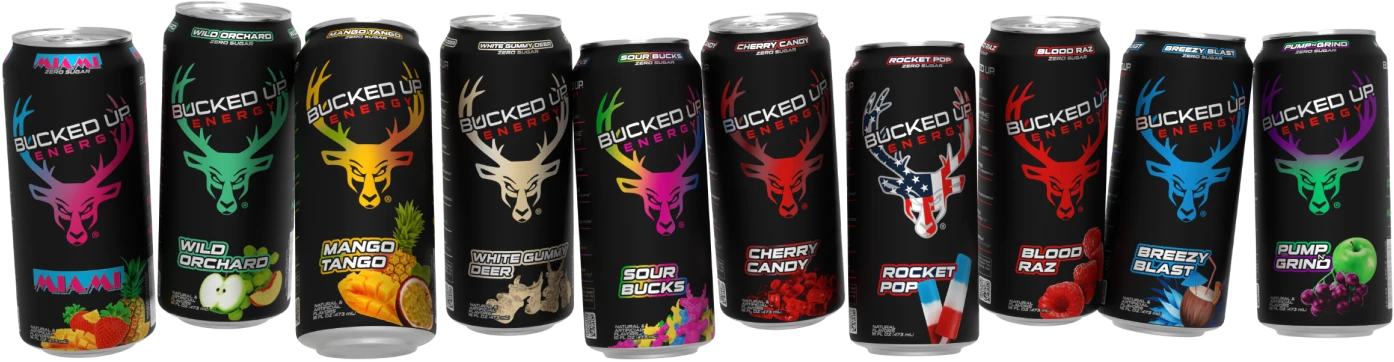
Ready to upgrade your focus? Upgrade to Bucked Up energy drinks for clean, crash-free performance.
Natural Ingredients That Help Clear Brain Fog
The most researched natural caffeine sources in focus-oriented formulations include green tea extract, matcha, guarana, and green coffee bean. Each delivers caffeine alongside co-occurring compounds (polyphenols, theobromine, chlorogenic acids) that may influence how the caffeine is absorbed and experienced. While these co-factors matter, the real science centers on what happens when you pair any of those sources with L-theanine.
A 2025 double-blind, placebo-controlled crossover study published in the British Journal of Nutrition (Nawarathna et al., 2025) found that a high-dose L-theanine-caffeine combination significantly improved neurobehavioural and neurophysiological measures of selective attention in acutely sleep-deprived young adults. That finding matters for anyone who has ever tried to train or work through a rough night. A 2025 systematic review and meta-analysis in Nutrition Reviews (Payne et al., 2025) evaluated randomized controlled trials and concluded that L-theanine plus caffeine, L-theanine alone, or tea consumption produced measurable effects on cognition, mood, and sleep outcomes in healthy participants.
Adaptogens extend the picture further. Functional ingredients such as ashwagandha, rhodiola, and nootropics including alpha-GPC are gaining mainstream traction in energy beverages because they support focus and reduce mental fatigue without subsequent crashes. Adaptogenic botanicals such as ashwagandha, ginseng, rhodiola, and maca are advancing at a 7.6% CAGR through 2031, driven by demand for sustained energy without crashes in natural energy drink and supplement formulations. The category is not chasing a trend. It is following the science. Understanding what the research supports is one step. Knowing how to spot those ingredients on real labels is the next.
Energy Drinks for Focus Without Crash: How to Evaluate What You Buy
L-theanine smooths caffeine delivery by supporting alpha-wave brain activity, the mental state associated with relaxed alertness rather than anxious stimulation. The result, when the ratio is right, is sustained focus without the sharp drop that follows a pure-stimulant hit.1 Adaptogens like ashwagandha and rhodiola layer on top by supporting the body’s stress-response systems, which helps maintain alertness across longer sessions.1 Knowing what works is half the equation. The other half is verifying that a product actually contains these ingredients at functional amounts.
Apply these criteria before buying a natural energy drink for focus:
-
Disclosed ingredient amounts. If a label lists a “proprietary blend” without individual dosages, there is no way to verify whether any ingredient is present at a meaningful amount. Full disclosure sets the baseline.
-
Identifiable caffeine source. Green tea extract, matcha, guarana, and green coffee bean are common natural sources. The label should name the source, not just list “caffeine.”
-
L-theanine presence. Look for it explicitly. Its presence alongside caffeine is a primary mechanism behind crash-reduced focus support.
-
Sugar content. Demand for sugar-free and low-calorie energy drink variants is rising rapidly due to growing global awareness of obesity and metabolic disorders. High sugar loads introduce their own energy curve that works against sustained focus.
-
Adaptogen specificity. “Adaptogen blend” without named ingredients and amounts creates the same problem as a proprietary blend. You should know what you are getting.
Formulation is evolving from simple caffeine stacking to designing integrated systems that support multiple physiological pathways, including balancing stimulation with metabolic support, recovery, and overall user experience. A drink that only delivers caffeine does not function as a focus drink. It functions as a stimulant with branding.
DIY Natural Energy Drink Recipe for Focus
This simple recipe lets you build a clean caffeine and L-theanine stack at home before committing to a ready-made product. It uses accessible ingredients and a repeatable process.
-
8 oz cold-brewed green tea (provides natural caffeine and naturally occurring L-theanine)
-
100 mg L-theanine powder (available as a standalone supplement to bring the ratio closer to research-supported levels)
-
1/4 tsp Himalayan pink salt (electrolyte support)
-
Juice of half a lemon (flavor and vitamin C)
-
1 tsp raw honey or a few drops of liquid stevia (optional, for taste)
-
Sparkling water to top off
Combine the green tea, L-theanine powder, and salt, then stir until dissolved. Add lemon juice and sweetener if you want it, and top with sparkling water. Drink 20 to 30 minutes before a training session or focused work block. The caffeine content will vary depending on the green tea used, so check the packaging for an estimate.
This mix gives you the core pairing of caffeine and L-theanine. It does not provide the broader performance stack, including ingredients that support pump, endurance, and the mind-to-muscle connection, that a purpose-built formula can deliver. Whether you mix your own or buy ready-made, understanding safe caffeine limits remains essential.
Safety Considerations: Caffeine, Kidneys, and Heart Health
Moderate caffeine intake is well-studied in healthy adults. The National Academies of Sciences, Engineering, and Medicine have not defined a moderate daily caffeine intake limit for healthy adults.
Safety questions arise mainly when intake exceeds moderate levels or when vulnerable populations, including children, adolescents, pregnant women, and caffeine-naive individuals, are involved. The U.S. Food and Drug Administration recommends a daily caffeine limit of 400 mg for healthy adults, which shapes formulation standards across the performance beverage category.
Individuals with pre-existing heart conditions, kidney concerns, or sensitivity to stimulants should consult a physician before adding any caffeinated product to their routine. Stacking multiple caffeinated products in a single day can push total intake above the recommended threshold without the consumer realizing it. Count all sources together, including coffee, tea, pre-workout, and energy drinks.
Why Transparent Formulas Matter: Bucked Up Pre-Workout Overview
Clean label is no longer a niche trend but has become a baseline expectation shaping product development, regulatory compliance, and brand strategy in 2026. Walmart cited that 62% of customers want more transparency in their food. Bucked Up was built around that expectation before it became a trend.
The Bucked Up pre-workout line discloses every ingredient and every amount on the label. No proprietary blends appear on the panel. You are not left guessing whether a key ingredient is present at a functional amount or just enough to appear on the label. Every serving lists what is in it and how much, which applies the transparency standard discussed earlier to every formula.
The flagship Bucked Up pre-workout is formulated to support energy, focus, pump, and endurance* with ingredients including Citrulline Malate, Beta-Alanine, Caffeine Anhydrous, AlphaSize® Alpha GPC (which supports mental focus and alertness*), Taurine, Deer Antler Velvet Extract, Astragin®, and Senactiv®.1 For users who have built a higher stimulant tolerance, Woke AF steps up to 333 mg of caffeine per serving with the same full-disclosure label.1 Mother Bucker, the most advanced formula in the line, combines 300 mg Caffeine Anhydrous with 100 mg Microencapsulated Delay Release Caffeine to support prolonged energy levels through training*, alongside Nitrosigine®, L-Citrulline, Hydroprime® Glycerol, Alpha GPC, Huperzine A, and L-Tyrosine for focus and mind-to-muscle connection support*.1
For users who train at night or are sensitive to stimulants, the Non-Stimulant Pre-Workout delivers the same pump and endurance support stack without any caffeine.1 For those specifically dialing in focus, BAMF adds Dynamine™ and Huperzine-A to the core formula to support mental sharpness and the mind-to-muscle connection*.1
The crossover between natural energy drinks for focus and pre-workout formulas is intentional. The same principles apply: disclosed ingredients, functional dosing, and a formula designed to support sustained performance rather than a short spike followed by a drop.
Conclusion and Next Step
Natural energy drinks for focus can work when the formula is built around clean caffeine sources paired with L-theanine, with adaptogens and nootropics rounding out the stack. The research supports the pairing, and the market is moving toward it. The evaluation criteria stay straightforward: disclosed ingredients, named caffeine sources, L-theanine presence, low sugar, and adaptogen specificity.
Bucked Up pre-workout formulas apply those same principles to a performance context, adding pump and endurance support* to the energy and focus stack, with every ingredient and amount listed on the label.1 That progression creates a logical next step for anyone who has outgrown a basic energy drink and wants a formula built for training.
Ready to find Bucked Up near you? Use the store finder to locate a retailer. Or skip the trip and go straight to the source.
*These statements have not been evaluated by the Food and Drug Administration. This product is not intended to diagnose, treat, cure, or prevent any disease.
Frequently Asked Questions
What makes a natural energy drink better for focus than a standard energy drink?
The primary difference lies in formulation intent and ingredient transparency. Standard energy drinks often rely on high sugar loads and undisclosed caffeine amounts to deliver a quick stimulant effect. Natural energy drinks formulated for focus typically pair a named natural caffeine source, such as green tea extract, matcha, or guarana, with L-theanine, an amino acid that supports calm, directed alertness.
When the label discloses both ingredients and their amounts, you can verify that the formula aims to support sustained focus rather than a short-lived spike. Adaptogens like ashwagandha and rhodiola are increasingly common additions that support the body’s stress-response systems for longer-lasting alertness. The evaluation criteria stay simple: look for a named caffeine source, confirmed L-theanine presence, low or no sugar, and full ingredient disclosure with individual amounts listed.
How much caffeine is considered safe in a natural energy drink for focus?
The FDA’s 400 mg daily limit for healthy adults provides a practical ceiling for total intake. While no official moderate intake limit has been established by the National Academies, research has shown that this 400 mg level is not associated with adverse health effects in healthy adults. The practical implication for energy drink consumers is to count all caffeine sources across the day, including coffee, tea, pre-workout supplements, and energy drinks combined, rather than evaluating each product in isolation. Individuals with pre-existing health conditions, sensitivity to stimulants, or who are pregnant should consult a physician before adding any caffeinated product to their routine. Children and adolescents are not the intended audience for caffeinated performance beverages.
Can Bucked Up energy drinks replace a pre-workout for gym sessions?
Bucked Up energy drinks and Bucked Up pre-workouts are distinct products formulated for different purposes. Energy drinks are designed for everyday focus and energy support and are suitable for work, study, or general activity. Pre-workout formulas like the Bucked Up pre-workout line are specifically built to support energy, focus, pump, and endurance during training sessions, with ingredients such as Citrulline Malate for nitric oxide production support, Beta-Alanine for endurance support, and AlphaSize® Alpha GPC for mental focus and alertness support.
If your goal is performance in the gym, a purpose-built pre-workout delivers a broader ingredient stack than an energy drink. If your goal is sustained focus through a workday or a lighter activity session, an energy drink may be the more appropriate choice. The two products can complement each other depending on your daily schedule, but they do not function as direct substitutes.
What is L-theanine and why does it matter in a focus energy drink?
L-theanine is an amino acid found naturally in green tea leaves. It is associated with supporting alpha-wave brain activity, the mental state linked to relaxed alertness rather than anxious stimulation. When paired with caffeine, L-theanine is studied for its role in supporting calm, directed focus rather than the jittery overstimulation that can accompany caffeine alone.
Research published in peer-reviewed journals including the British Journal of Nutrition and Nutrition Reviews has examined the combination in healthy adults and found measurable effects on cognition and mood. For consumers evaluating a natural energy drink for focus, L-theanine’s presence on the label, with a disclosed amount rather than a vague “blend,” serves as one of the clearest indicators that the formula is built around sustained cognitive support rather than pure stimulation.
Are Bucked Up pre-workouts suitable for beginners who are new to caffeine-containing supplements?
Bucked Up offers a range of pre-workout formulas designed for different experience levels and stimulant tolerances. The standard Bucked Up pre-workout contains 200 mg of caffeine per serving, which falls within the moderate range for healthy adults and is positioned as an entry point for beginners and general gym-goers. For individuals who are sensitive to caffeine or prefer to train without stimulants entirely, the Non-Stimulant Pre-Workout delivers the same pump and endurance support stack with zero caffeine.
Beginners are encouraged to start with the lowest caffeine option, assess their individual response, and factor in all other caffeine sources consumed during the day to stay within the 400 mg daily limit recommended by the FDA. Consulting a physician before starting any new supplement routine is always a reasonable step, particularly for individuals with health conditions or concerns about stimulant sensitivity.
References
Nawarathna, L. S., et al. (2025). High-dose L-theanine-caffeine combination improves neurobehavioural and neurophysiological measures of selective attention in acutely sleep-deprived young adults. British Journal of Nutrition. https://pubmed.ncbi.nlm.nih.gov/39828591/
Payne, A., et al. (2025). Effects of tea, L-theanine alone, or L-theanine plus caffeine on cognition, mood, and sleep outcomes in healthy participants: A systematic review and meta-analysis of randomized controlled trials. Nutrition Reviews. https://pubmed.ncbi.nlm.nih.gov/39648884/
1 The content provided in this article is for informational purposes only and is not medical advice. Consult with a medical professional before implementing any changes to your diet, health, or exercise routines. Individual results will vary and are based on a combination of each individual’s diet, exercise, age, and health circumstances. These statements have not been evaluated by the Food and Drug Administration. This product is not intended to diagnose, treat, cure or prevent any disease.
This article was written by Ryan Gardner, CEO of Bucked Up. As the maker of Bucked Up Energy Drinks, we have a financial interest in this information. The views expressed are our own and should be read with that context in mind.


Leave a Reply